
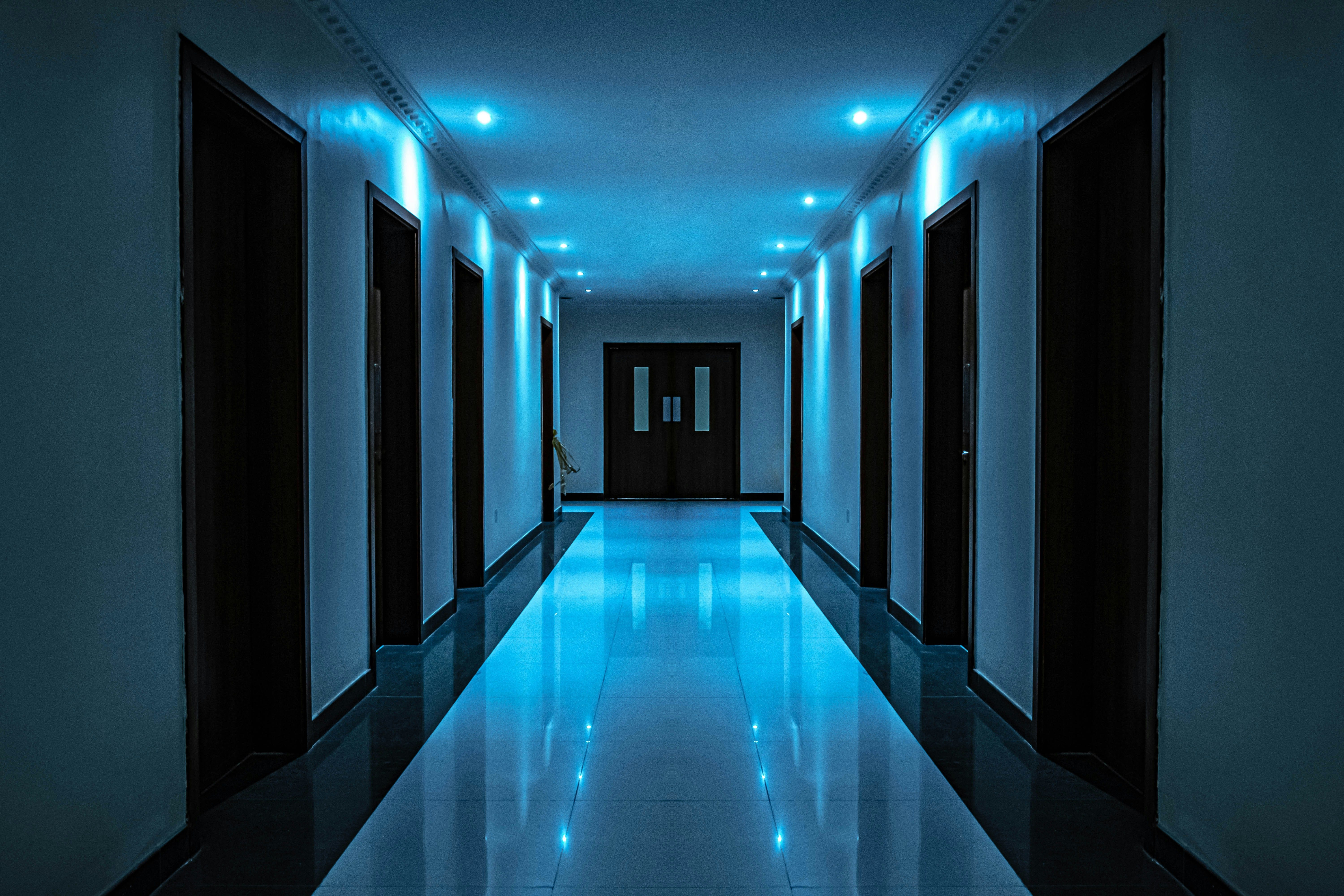
The mop felt heavier than it looked. Stiff clumps of dark residue clung to the strings, flaking at the edges, reeking faintly of old metal and damp coins. I hauled it along the hospital corridor, rubber soles tapping on wet tile, sounding almost official, like I had permission. I didn’t. I was seventeen, not even old enough to rent a car, and I had no business holding that mop. But when you’re locked in a basement with no exit, you take what you can find.
Chicago nights always had a bite, even in late summer. Hours earlier, when the storm broke, I’d been outside the hospital with my friend Darius, the kind of friend who said things like, “Go ahead, grab it, nobody’s watching.” I did. Stupid lip gloss from the Walgreens by State Street. First time? he asked. Only it wasn’t. My pockets had held candy bars, chips, little things snatched over weeks, kept from Mom, kept quiet from me too. But this time, the alarms rang sharper than the thunder outside.
I ran. The storm raged. And somehow I ended up here.
The basement stank of bleach and wet rot. My face in the shiny door windows looked like a drowned stranger: hoodie stuck to my arms, jeans heavy with water, breath smearing the glass. I should’ve been home, safe. Mom thought I was at the library, and if she knew, her trust would snap like cheap earbuds.
Somewhere above, children screamed. Not playful screams. Panic, the kind that rattles air ducts.
“Hello?” My voice cracked. I gripped the mop tighter. Stupid weapon, I knew, but it gave me something to hold.
“Who’s there?”
A man’s voice. Steady, too steady. I turned fast, nearly lost my balance. Down the hall, behind stacked linens, someone stood. Pale green scrubs, ID badge swinging. He stepped closer.
“I’m maintenance,” he said. “Basement door locks when the storm hits. Backup generator is late.”
“That supposed to make me feel better?” I asked.
He almost smiled. But his eyes stayed flat.
Hours blurred. Or maybe minutes. Hard to tell when there’s no phone, no clock, no sun. The storm rattled the pipes, cold drops landing on my neck like tiny warnings. The children’s voices above quieted, then returned louder, then stopped again.
“What’s happening up there?” I asked.
The man pushed a cart loaded with cleaning bottles, each label peeling. “Kids get scared during storms. Power cut.”
“Why were they screaming like that?”
“Maybe they saw something. Maybe they lost power too.”
He kept his eyes away. That shaky kind of trust, it sat there, tight, like frayed wire ready to break.
We walked the hall. My mop squealed with every drag, his cart rattled like loose bones. Then I saw it: footprints, wet, circling on the floor. Over and over, the same shoe size, looping around until the tiles looked like a carousel of steps.
“Who did that?” I asked.
“No one,” he said quickly.
“You think I’m blind?”
He stopped pushing. His shoulders hunched. “They circle back because the doors here don’t open. You walk and walk and end where you began. Like the city itself. You leave the South Side, think you’re free, then end back where you started.”
“That’s not… that’s not an answer.”
But it was, in a way. My chest tightened, like my own shoes had been doing the same circle all summer: stealing, hiding, lying.
We found a chapel. Strange place for a basement, but there it was. A small white room with folding chairs, a cross fixed to the wall, a single candle burning though no flame touched it.
He whispered, “Congregation thinks it’s a sign.”
“From what?”
“From who.”
I hated the way he said it, like the candle meant something personal. The mop slipped from my hand.
“Why lock us down here?” I asked.
He shifted. “Storm protocols. Or maybe it’s easier to keep problems under the ground.”
I laughed, bitter. “You don’t even know me.”
“You think I don’t? I see your pockets.” His eyes darted to my hoodie. “Took something again, didn’t you?”
Heat rushed to my face. “You don’t get it.”
“I do,” he said softly. “Everyone steals something. Some steal time, some steal hope. You just picked lip gloss.”
I almost cursed at him. Almost. But his voice, it wasn’t mocking. It was tired, heavy.
Time passed. My thoughts spun. I imagined Darius ditching me, telling everyone I chickened out. Saw Mom getting that call, her shoulders dropping. Felt the mop in my hand going thick, darker, not a mop now but a weight.
“Why are you really here?” I asked.
He leaned against the candlelit wall. “I was supposed to fix lights. Never got upstairs. And maybe I like it down here. Less noise.”
The candle flared brighter. My eyes watered.
Children screamed again above. Louder this time, like a wave crashing.
I grabbed the mop. “We can’t stay here.”
We tried doors. Locked. We tried stairs. Flooded. My hoodie clung colder, heavier, until I ripped it off. My hands shook. I kept seeing those footprints. Always circling, never forward.
“Why are the steps only one size?” I asked.
He paused. His jaw twitched. “Because they’re mine.”
The hall tilted. My pulse raced. “You walked in circles until you wore them in.”
“Maybe.”
“Or maybe you’re lying.”
Strained trust again, pulling harder.
We reached another hallway. This one reeked more strongly of mold, almost sweet. Doors lined the sides. Some had numbers, some didn’t. I touched one, cold steel under my fingers.
“Don’t,” he said sharply.
“Why?”
“You’ll see things you don’t want.”
I opened it anyway. Inside was nothing but folded hospital gowns. Still, they hung like bodies waiting for shape. I slammed it shut.
“See?” he said.
My chest ached.
We argued, no, we didn’t argue, we stumbled through half-formed sentences.
“I’m not staying here.”
“You don’t have a choice.”
“Bullshit, there’s always a choice.”
“Not always.”
He sounded broken, and maybe I did too.
Then the weather shifted. Rain turned to hail, slamming the windows somewhere above us. Wind roared through vents like a train. The candle in the chapel bent sideways but didn’t go out.
And in that chaos, I laughed. I mean, it was insane, right? Locked in a hospital basement with a stranger who walked circles until his feet made rings. Me, lip gloss thief pretending I was a survivor. And yet, my laugh filled the hall like I actually meant it.
He stared at me. “Why are you laughing?”
“Because maybe the candle’s right,” I said. “Maybe it is a sign. Or maybe it’s nothing. Either way, I’m not circling anymore.”
“You really think you can walk out of a storm?”
“Yeah,” I told him. “I’ll give it a shot.”
We pushed another door. This one opened.
Upstairs, dim lights flickered back, voices calmed. Children’s screams faded into nervous giggles. The world above hadn’t ended. It was still Chicago, soaked and cold, but alive.
I turned to say thanks, but he was gone.
Only the mop stood there, leaning, its red marks deeper. Footprints circled at my feet.
And yet, I stepped forward.
I don’t know what it meant. Maybe nothing. Maybe everything. But when I stepped out into the storm-washed night, the air tasted cleaner, like maybe Mom would still look at me and see her son. And maybe, if the candle burned underground without flame, then I could burn too, not as fire, but as something almost like hope.
Ambiguous. Fragile. Real enough.

Based in Malang, Indonesia, Fendy S. Tulodo works as a creative guy. He sells motorbikes for a living, but his real passion lies in writing and making music under the name Nep Kid. His characters face hard choices where right and wrong mix. Follow him on Instagram at @fendysatria_
Our fifth volume of The Write City Review is hot off the presses! It’s a 200-page anthology of poetry, short stories, essays, and book excerpts drawn from the Chicago Writers Association’s online publication, The Write City Magazine over the last 3 years. Order yours today.
The review will also be available for sale at the Let’s Write Conference - June 20 and at Printer’s Row - September 12-13.

I never comment on anyone's stuff and never read anything all the way through, but your style is stunning. Thanks. G.