

Interview With Literary Publicist Julia Borcherts
On How Authors Can Craft an Impactful Social Media Presence


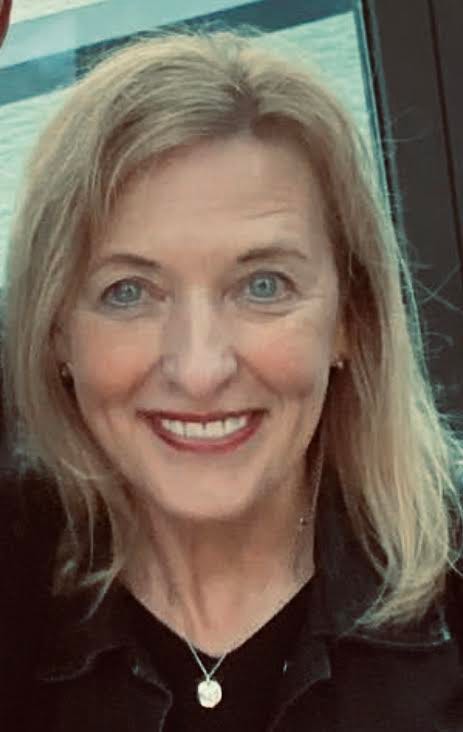
B.A. Durham: At the 2026 Chicago Writers Association’s Let’s Just Write conference, you mentioned how to split your social media posts so they're a good mix of self-promotion, personal details, and being a good community member. Could you talk a bit about this?
Julia Borcherts: What I’ve discovered over the years is that readers really enjoy getting to know the authors creating books they like, and social media offers some access behind the scenes into authors’ lives. These different details are appealing to friends and colleagues, too. It helps people feel connected to others when in-person time is limited, and it’s a good way for authors to establish an authentic presence, rather than just going online to say, “buy my book” every day.
It’s also important for an author to demonstrate commitment to the larger community, and it’s a nice way to help them expand their audiences. Hopefully, what you put out in the world will come back to you, too.
I recommend balancing posts somewhat equally between the professional, personal, and community aspects of your life, which looks something like this:
Professional posts can be news about your book, photographs of your writing desk and/or written pages, manuscripts with notes, anecdotes about a new chapter or scene you’re working on, fun facts about research you’re doing, events or people in the news cycle that connect to your book, photographs of locations that inspire you or connect to your writing, graphics that announce your appearances, graphics that include a pull quote from a review or blurb, photographs from conferences and residences you’re attending, things you’ve discovered about yourself through writing, ways your writing process has evolved, etc.—and occasionally, announcements with links to pre-order your book.
Personal posts can be snapshots from family dinners, vacations, walks around your neighborhood, your pets, your local farmers’ market, a beautiful sunset, a classic car that’s parked on your block, a plant in your yard that’s beginning to flower, a mountain or waterway in your region, a snowstorm outside your window, an anniversary, a reunion, a recipe you’re cooking, a view from your bike ride or morning/evening run, a few videos from a show you’ve attended or a benefit for a cause that’s meaningful to you. Anything (no matter how big or small) that feels interesting to you at all is something you can consider for a personal post—but again, go with what feels authentic and/or interesting to you, not what you feel everyone else is doing.
Community posts are all about being a good literary citizen and connecting your online life to your real-life community. These posts can be a photo of a book you enjoyed with a few words about it (tag the author, of course, so their fans see it, too), a round-up of books you can’t wait to read, a photo or two from a book launch you attended, photos of bookstores and libraries you visit, re-shares of someone else’s preorder and/or launch day links, shared information about workshops others are teaching (and those you’re attending/investing in as a participant) and anything else that introduces and lifts up others’ work to your followers. Of course, your in-person participation at events is key because the online support will help amplify it but doesn’t take the place of real-life connections. Still, it’s important to build and nurture and grow your community.
B.A.: Which social media sites should authors use? You mentioned the ones where your audience will find you, but are there any that are a safe bet for all writers?
Borcherts: The most important thing is to identify the target audience for your book and then look for where that audience goes for their recommendations. If you’re writing crime fiction, that’s a very different target audience than if you’re a poet. See which influencers are promoting authors and books most similar to yours and start following them (and liking and commenting on their posts when appropriate). Which influencers are your friends following?
Most influencers are on Instagram, TikTok, and YouTube, since these platforms require visual components. Those three platforms are where you’re most likely to find people outside your own circle who are promoting books.
If you’re going to choose one to establish your own presence, it should be Instagram. If influencers (or friends) tag you in a post, new people can find you that way, and Instagram is probably the most universally used platform in the world of books, authors and literary influencers.
That said, your own current audience is also likely on either Facebook, BlueSky, or LinkedIn as well. Even though you’re not likely to find new people that would promote your book there, it’s still a place where you’re connecting to your community. It’s important to pay attention to the networks where you currently connect with your friends/colleagues/family, because mobilizing the audience you have is the baseline for everything else. That doesn’t mean you need to be promoting yourself continually on these platforms, but you should at least add your website link and new book information to your bio there. Also, make sure to use your book cover image as your cover page.
B.A.: Are there any social media sites that aren’t as good for authors trying to get discovered?
Borcherts: Certain platforms, such as X, have seen dramatic declines over the last few years. Threads, Pinterest, and Snapchat are not as popular as they were now that the initial novelty has worn off. Unless a specific influencer who’s perfect for your book is exclusively on one of those outlets and still has a lot of followers with strong interaction, you don’t need to invest much (if any) time there.
The most important thing for authors is to be writing—even when you’re promoting a new book, it’s more important to be working on your next book than to be chasing coverage all over the place. Because of this, it’s not great to invest a lot of time creating coverage for outlets that aren’t going to provide much visibility for you and your book, such as microblogs. (It would be ok for them to share a non-exclusive excerpt from your book, but maybe not worth taking a lot of time to pen a guest essay that few people will see.)
However, while blogs in general are declining in popularity as a platform, Substack seems to be increasing in popularity, particularly with authors, and it may be worth investing an hour of your time to see if it connects well with your goals.
B.A.: How does post frequency relate to building a successful online presence? Is there a balanced point at which it is frequent enough to let your audience know you’re alive without oversaturating their feeds?
Borcherts: That’s a great question. The most important thing is consistency, and maybe two to three times a week is good. Dramatic increases and/or long disappearances on a platform can cause readers and influencers to feel like you don’t value the outlet. And if an author suddenly becomes promotionally hyperactive near a book launch after months of dormancy, it can come off as very sales-y rather than organic.
As far as consistency, you don’t want to post more than once a day or less than once a month, unless there are special circumstances. You want people to recognize that you’re an active part of the community, but not to feel like you’re hogging the algorithm by posting all day, every day. (Also—you want readers to understand that you’re writing, working, or otherwise living your life most of the day, not glued to your social media accounts, right?)
Still, if there are fun things you like to post a lot that aren’t crucial, you can add them to your Instagram and/or Facebook stories—people will see them if they opt in to the Stories, and they expire after 24 hours, so it’s a polite way to post and/or reshare a lot of information without it looking like you’re over-doing it. Anything very important, however, such as pre-order links or your book launch party schedule, should go on your wall (rather than in a story) so people can find it later.
B.A.: Are author websites as relevant as they used to be? Or is social media more effective for getting the word out about your book?
Borcherts: A professional-looking author website is still crucial. Agents, potential publishers, media outlets, people who hear about your book from outside recommendations—they’ll all appreciate a professional website with a bio and—front and center—a prominent link to pre-order or buy the book. You can’t preorder a book directly from Instagram so, once readers discover you and your book, they can go to the website link in your bio to learn more about you.
Also, if you make bookmarks or postcards and include a QR code linking to your website so potential readers can learn more, it makes it easy for potential readers intrigued by the book to preorder directly. It’s much better than having the QR code go to your publisher’s website or a single retailer.
You’re correct, though, that a website is not a tool that enables discovery on its own, so social media presence is important. On the website, make sure there are buttons to connect to your active social media pages.
B.A.: Have you seen an impact from AI on social media on how authors use, or should use, social media?
Borcherts: The biggest shift I’m seeing is AI-generated book coverage from less-than-top-tier reviewers on sites such as Goodreads and Bookbub and retail outlets such as Amazon. I think they see it as a way to improve their efficiency--they can request a gazillion free books, read them, and then get credit for leaving a review that reads like a book report, which they didn’t actually write. There’s no apparent harm in this (the reviews are almost always positive), but it still makes many people (including me) uneasy. It’s like ordering a pizza, and then holding it up and saying, “See what I made!”
I’ll sometimes see authors post a potential book cover they generated using AI and this prompts backlash in the writing community because (even though it may seem like a fun game), they’re “creating” something through a language learning model that uses work stolen from actual artists without their consent, developed expressly to put them out of work, which isn’t really something to have fun with, is it?
With the proliferation of computer-generated images, text, and other content, there’s been a rise across all platforms in appreciation for content that is clearly authentic. Please feel free to post your photos, your graphics, all the things you make that aren’t flattering, and don’t look like they’ve been polished, altered, edited, filtered—the blooper reels are what people want to see more of, the types of things that only a human can create.
B.A.: Any other thoughts or information you think would be helpful for authors who don’t feel comfortable posting much on social media?
Borcherts: You can start small and you should not feel the need to post anything that feels too private or that feels like a risk to you. It’s not necessary to post opinions. If you want, just start by scrolling through your feed, adding a “like” or a comment to others’ posts that bring you enjoyment, and see if certain types of posts feel inspiring to you. If you do, you can look for something similar in your own life or work or creative practice to photograph and share.
And if you only want to go on social media once a week (or once a month), you can set that appointment on your calendar, look at it as part of the “business” side of your work and go from there. You can also, if you prefer, that half of that hour to see which influencers your friends and colleagues are following and, if you like what they’re posting, you can follow them, too. It’s absolutely fine to explore the community in small increments.
Julia Borcherts is the founder of Julia Publicity, a literary PR and marketing agency, and a 12-year industry veteran who has led successful campaigns for many New York Times bestselling authors and debut authors alike, as well as for titles and catalogs with Big Five, independent, and university publishing houses. She teaches at DePaul University and regularly speaks at literary conferences and events. You can visit her online at juliapublicity.com or email her at julia@juliapublicity.com.
Great interview. Lots of good reminders.
Thank you
A concise interview. Cuts straight to information that is useful and timely. Clear answers, too. Thanks to both of you.